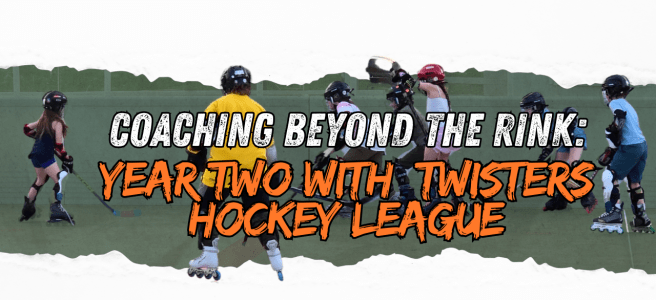
We are a few weeks into this season, practices have been going amazingly, and I’m super excited about what is going on! This is my second year coaching in the Twisters Hockey League—and my second season stepping into the role of head coach for a team. Last Fall, I head-coached and assisted one of the other teams, and that head coach assisted me. We practiced together, but this season, I’m completely on my own as a head coach (Kinda, I’ve got a lot of support when I need it)
That might not sound like a long time, but it’s been long enough to realize something important:
Coaching kids ages 5–12 isn’t just about hockey.
It’s not just about running drills, teaching positioning, or improving passing and shooting. Those things matter, sure—but at this age, they’re not the main thing.
At this age, it’s about building a love for the game.
It’s about learning sportsmanship.
It’s about developing life skills that go far beyond the rink.
And if we get that part right, the hockey will follow.
Rethinking What Practice Looks Like
This season, I’ve been intentional about changing how I approach practice.
Instead of jumping straight into drills, I’m setting aside the first 10–15 minutes for something more foundational: life development.
We talk about effort—not just when it’s easy, but when it’s hard.
We talk about being a good teammate—encouraging others, not tearing them down.
We talk about handling mistakes, respecting others, and showing up with the right attitude.
Because the truth is, these kids are learning how to be people just as much as they’re learning how to play hockey.
If they leave the season with better character, stronger confidence, and a deeper understanding of how to treat others, that’s a win—no matter what the scoreboard says.
The Responsibility of a Coach
Coaching at this level carries a responsibility that goes far beyond the whistle.
These kids are always watching.
They notice how I respond when things go wrong.
They hear how I talk about referees, opponents, and even other coaches.
They pick up on whether I lead with patience or frustration.
Being a coach means being a role model—whether you intend to be or not.
So if I’m asking them to:
- Show respect
- Give full effort
- Support their teammates
…then I have to model those things first.
Because more is caught than taught.
Raising Up the Next Leader
One of the things I’m most excited about this season has nothing to do with systems or drills—it’s about people.
I brought on a teenage assistant coach who plays in the older league.
She loves the game, understands it well, and, more importantly, she wants to invest in the next generation. She told me that when she ages out as a player, she hopes to come back and coach in the league someday.
My response?
Why wait?
So this season, I’m giving her 10 minutes during each practice to run her own drill. Not just help. Not just observe. Lead.
Because leadership isn’t something you magically step into one day—it’s something you develop over time.
This is about raising up young leaders.
It’s about giving responsibility, not just instruction.
It’s about trusting someone enough to let them grow, even if it’s not perfect.
And honestly, the kids love it. They connect with her in a unique way, and she’s already growing in confidence as a leader.
If we want strong leaders in the future, we have to start developing them now.
From Pastor to Coach
This shift in how I coach has also reminded me a lot of my time serving as a pastor.
When I was in that role, it was clear what the calling was: care for people, guide them, help them grow. It was structured, it was visible, and yes—it was a little bit of a paid position.
But over time, I’ve come to understand something deeper:
Pastoring isn’t just a job. It’s a posture.
It’s how you lead people.
It’s how you show up in their lives.
It’s how you take responsibility for their growth and well-being.
And that doesn’t stop when you leave a church role.
Now, instead of a congregation, I have a group of young hockey players. Instead of a pulpit, I have a bench. Instead of sermons, I have short conversations before practice.
But the heart is the same.
Care for people.
Be present.
Help them grow.
Coaching Like Jesus (Without Preaching)
This isn’t a faith-based league. I’m not there to teach Scripture or lead Bible studies during practice.
But that doesn’t mean faith is absent from what I’m doing.
Because all truth is God’s truth.
When I’m teaching kids to:
- Put others first
- Stay humble in success
- Persevere through challenges
- Treat others with kindness and respect
…I’m reinforcing truths that are deeply rooted in Scripture, even if I never quote a verse.
Jesus led by example.
He met people where they were.
He taught in ways they could understand.
He cared deeply about individuals.
That’s the model I want to follow.
So coaching like Jesus, in this context, looks like:
- Choosing patience over frustration
- Encouraging instead of criticizing
- Correcting with care, not anger
- Seeing each kid as more than just a player
I may not be preaching from the rink, but I can still reflect Christ in how I lead.
More Than a Season
At the end of the day, this season isn’t just about wins and losses.
It’s about impact.
It’s about the kid who learns to keep going after failure.
It’s about the teammate who starts encouraging others instead of staying quiet.
It’s about the young leader stepping up and realizing, “I can do this.”
And it’s about continuing to grow myself—not just as a coach, but as someone called to lead, serve, and invest in others.
I’ll be sharing more of these lessons throughout the season on the blog—both the successes and the things I’m still learning along the way.
Because this journey isn’t just about developing hockey players.
It’s about developing people.
And that’s a mission worth showing up for every single practice.
Keep my team in your prayers as we grow together
Father God,
Thank you for the opportunity to coach and lead these kids. I ask that we have a great year of growing together. Please be with them and me as we continue to grow, please give me the wisdom and discernment to lead them in a way that is according to your will.